

Inventory mismatch becomes a serious problem when the WooCommerce admin and the storefront stop reflecting the same stock reality. One side may show the latest quantity, while the other still follows older data, different stock rules, or a separate inventory source.
In this guide, we’ll explain everything related to inventory mismatch between admin and frontend in WooCommerce, including what causes it, where the mismatch usually starts, and how to bring inventory back into a more consistent flow across the store.
Where Admin And Frontend Inventory Fall Out Of Sync
Inventory mismatch usually starts at a specific point in the stock flow rather than across the whole store at once. Finding that point early makes it easier to understand whether the issue comes from saved product data, stock handling rules, delayed updates, or the way inventory is being shown on the storefront.
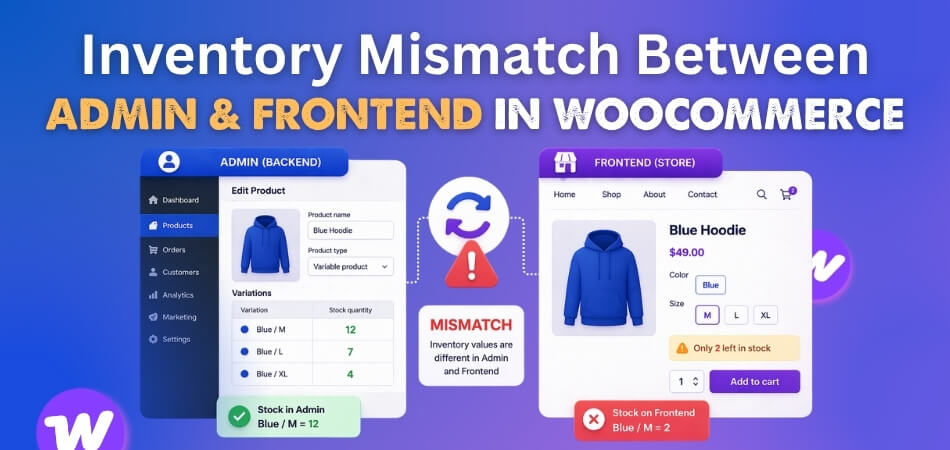
Before getting into the exact causes behind the mismatch, it helps to look at the main areas where admin and frontend inventory usually stop staying aligned.
- Saved product data can stop matching live storefront output.
- Stock quantity and stock status can fall out of step.
- Order-related changes can affect inventory unevenly.
- Delayed updates can leave storefront stock behind.
- Themes or plugins can alter how inventory appears.
- Multiple inventory sources can create conflicting stock views.
Why Admin And Frontend Can Drift Apart Even When Stock Exists?
Inventory mismatch does not always mean the stock is gone. In many WooCommerce stores, the quantity still exists, but the admin and storefront stop reflecting it in the same way. That is why the product can look fine in one place while appearing wrong in another.
To see why that happens, look at the main reasons below.
- Direct Admin Read: Admin usually reflects the saved stock value more directly.
- Extra Frontend Layers: Frontend inventory can pass through themes, plugins, or custom display logic.
- Quantity and Message Gap: Stock quantity and the visible stock message do not always mean the same thing.
- Order Impact: Recent order activity can change how inventory appears across the store.
- Delayed Updates: Stock changes may save first and appear later on the storefront.
- Multiple Sources: Different tools can end up reading inventory from different places.
What Causes The Inventory Mismatch Between Admin and Frontend And How To Fix It
Inventory mismatch usually happens when WooCommerce admin and the storefront stop relying on the same inventory path at the same time. In many stores, the stock value itself is not completely wrong. The real issue is that one layer updates faster, reads a different source, or displays inventory through different logic than the other.
To see where that inconsistency usually begins, look at the most common causes and the matching fixes below.
Cached Stock Output Stays Behind
Caching is one of the most common reasons the frontend shows different inventory from the admin. The backend can already reflect the latest saved quantity while the storefront continues serving an older product view, stock message, or availability state.
Fix:
- Clear your cache plugin.
- Purge server-level and CDN cache.
- Retest the product page as a guest user.
Product Lookup Tables Fall Out Of Sync
WooCommerce uses product lookup tables to help the storefront load inventory-related data more efficiently. If those tables stop reflecting the latest stock change, the frontend can keep showing older inventory even though the admin has already updated it.

Fix:
- Go to WooCommerce > Status > Tools.
- Run Regenerate product lookup tables.
- Reload the affected product and compare the admin and frontend stock again.
WooCommerce Transients Keep Old Product Data Active
Transients can preserve older product-related data after stock changes. That can leave the frontend showing outdated inventory until those temporary values are cleared and WooCommerce refreshes the product output properly.
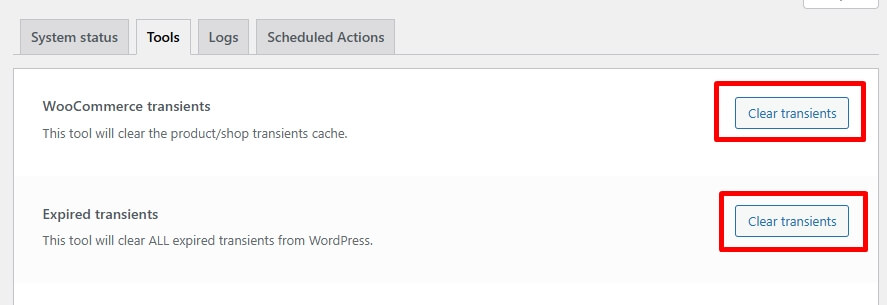
Fix:
- Go to WooCommerce > Status > Tools.
- Run Clear transients.
- Run Clear expired transients.
- Recheck the product page after the cleanup.
Theme Or Plugin Logic Changes The Stock View
Some themes and plugins do not show raw WooCommerce inventory directly. Instead, they can rewrite stock messages, adjust availability labels, or display inventory through their own rules, which makes the storefront look different from the backend.
Fix:
- Switch to a default theme temporarily.
- Disable all except the WooCommerce multi locations inventory management plugin.
- Reactivate them one by one until the mismatch returns.
Out-Of-Stock Visibility Settings Create Confusion
Stock mismatch can sometimes look worse because visibility rules are changing what customers can or cannot see. If out-of-stock items are handled differently in the catalog than expected, admin and frontend behavior can feel inconsistent even when the quantity itself is correct.
Fix:
- Go to WooCommerce > Settings > Products > Inventory.
- Review Hide out of stock items from the catalog.
- Adjust the setting to match how you want unavailable products displayed.
Variation-Level Stock Is Not Set Correctly
Variable products can drift out of sync more easily because WooCommerce may rely on both parent-level and variation-level stock logic. If variation quantities are missing or only the parent product is being relied on, the frontend can show misleading availability.
Fix:
- Open each affected variation.
- Confirm stock is managed at the correct level.
- Enter stock quantities for each tracked variation.
- Retest the variation selector on the product page.

CSV Imports Or Bulk Updates Override Inventory Unexpectedly
Recent imports or large product updates can create inventory mismatch if stock fields were mapped incorrectly or overwritten in bulk. The admin may show one saved result while the frontend still reflects inventory that was changed in an unexpected way.
Fix:
- Review the recent import or bulk update source.
- Confirm stock fields were mapped correctly.
- Recheck affected products after correcting the import data.
Database Or Status Errors Interrupt Inventory Consistency
If the mismatch continues after the main checks, WooCommerce status issues or database problems may be getting in the way. In that case, the inventory data, lookup tables, or store-level sync may not be working cleanly in the background.
Fix:
- Go to WooCommerce > Status.
- Review red warnings, failed checks, or database-related errors.
- Investigate any stock-related issues shown in the status report.
How To Validate Inventory Consistency After The Fixes?
Fixing the mismatch is one thing, but making sure it stays fixed is what really matters. Inventory can look correct right after a change, then drift apart again once new orders, product updates, or normal storefront activity come into play. Here’s how you can validate inventory consistency after the fixes.
- Compare Admin And Frontend Stock: Review the saved stock value in WooCommerce admin and confirm the live product page now reflects that same inventory state clearly.
- Check Guest And Logged-In Views: Make sure regular visitors and logged-in users are no longer seeing different stock messages for the same product.
- Review Shop And Product Pages Together: Confirm that category listings and single product pages now show the same availability instead of drifting apart.
- Test Simple And Variable Products Separately: Check both product types so you can confirm inventory stays consistent across different stock structures.
- Validate Cart And Product Availability: Add the product to cart and make sure the purchasable state still matches the stock shown on the page.
- Review Recent Order Impact: Look at recent orders to confirm pending, failed, or cancelled activity is not pushing inventory out of sync again.
- Watch The Next Stock Update Closely: Make another inventory change and confirm the storefront reflects it without falling back into delayed or conflicting stock output.
- Confirm Stability Under Normal Store Use: Keep an eye on the same product during regular traffic to make sure the mismatch does not quietly return.
Why One Reliable Inventory View Gets Harder To Keep?
Keeping admin and frontend inventory aligned becomes harder once stock starts moving through more products, more updates, and more store layers at the same time. As that happens, the issue stops being just one mismatch to fix and starts becoming a wider consistency problem across the store. The main pressure points usually show up in the areas below.
- Frequent Stock Changes: Repeated inventory updates make small mismatches easier to miss, especially when stock changes happen across different products throughout the day.
- Larger Product Catalogs: A growing catalog creates more product pages, category views, and inventory touchpoints that all need to stay aligned.
- Variable Product Logic: Variation-based products introduce more stock paths, which makes it easier for admin and frontend inventory to drift apart.
- Extra Plugin Layers: Additional plugins can add their own stock rules, display logic, or inventory sources that complicate consistency across the store.
- Delayed Inventory Updates: Inventory changes do not always appear everywhere at the same moment, which makes long-term consistency harder to maintain.
- Multi-Location Stock Paths: Multi-location inventory creates more stock sources and fulfillment contexts that need to stay connected across admin and storefront.
Better Inventory Alignment With Multi Location Product & Inventory Management
Inventory problems become much harder to control when stock data needs to stay consistent across the dashboard, storefront, and fulfillment flow at the same time. As stores grow, even a small disconnect between those views can lead to repeated checks, confusing availability, and a less dependable buying experience. Multi inventory management for WooCommerce gives stores a more structured way to keep inventory clearer and more consistent across the store.
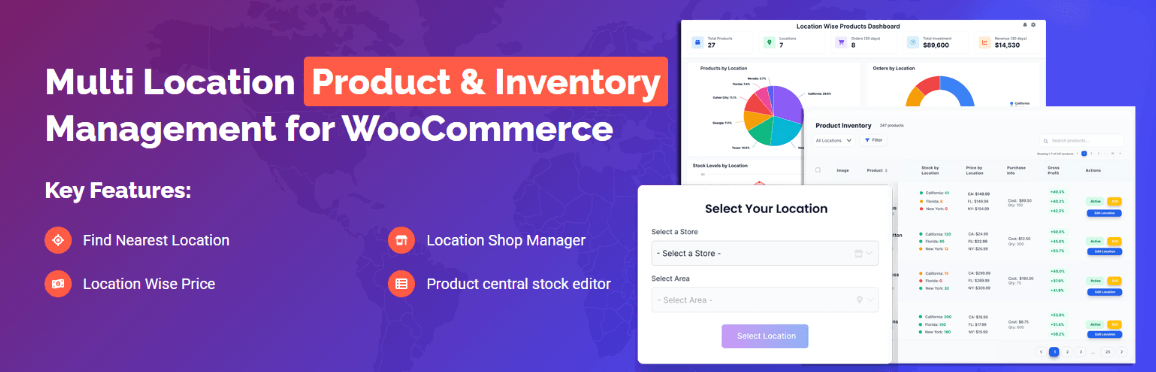
Here are some of the ways it helps support better inventory alignment:
- Admin and frontend inventory stay easier to align.
- Stock visibility becomes clearer across selling locations.
- Product availability feels more consistent to shoppers.
- Inventory updates become easier to manage reliably.
- Growing stores get a steadier stock workflow.
Frequently Asked Questions
Store owners usually run into a few follow-up questions once the main issue becomes clearer. These FAQs focus on the practical concerns that come up when admin stock and storefront availability stop staying aligned the way they should.
Can Inventory Mismatch Affect Some Products More Than Others?
Yes, that can happen when certain products pass through more variation logic, plugin rules, or display conditions than the rest of the catalog. In that case, the mismatch may appear uneven instead of affecting the whole store the same way.
Why Does The Problem Sometimes Return After It Looks Fixed?
A mismatch can come back when the next stock update passes through the same delayed or conflicting inventory path again. That is why one successful product check does not always mean the wider issue is fully resolved.
Does This Become Harder To Manage As The Store Grows?
Yes, because more products, more updates, and more inventory touchpoints create more chances for stock views to drift apart. As stores grow, keeping one reliable inventory view becomes more demanding.
Can Inventory Mismatch Affect More Than Just Stock Visibility?
Yes, because the issue can also influence customer confidence, fulfillment decisions, and how reliably the store reflects actual product availability. Once inventory stops matching across views, the problem reaches beyond one product page.
When Does A Store Need A More Structured Inventory Setup?
That usually becomes clear when admin stock, storefront availability, and operational stock handling no longer stay aligned through simple fixes alone. At that stage, a stronger inventory workflow becomes the more reliable long-term option.
Final Takeaways
Inventory mismatch between admin and frontend in WooCommerce usually means the store is no longer showing one clear inventory view across the backend and storefront. In many cases, the stock itself is still there, but different layers of the store stop reflecting it in the same way.
Getting that alignment back matters. Once admin stock, storefront availability, and fulfillment logic start staying connected again, inventory becomes easier to trust, easier to manage, and less likely to create the same confusion later.
